

Water-damaged ceilings are a common yet serious issue faced by many London homeowners. Whether caused by roof leaks, burst pipes, or storm damage, water ingress can lead to long-term structural problems if not addressed promptly. In this guide, we’ll explore how water damage to ceilings typically occurs, the signs to watch for, and the risks of ignoring early damage. We’ll also walk through the home insurance claim process and highlight common mistakes homeowners make. Lastly, we’ll show how All Property Claims can support London homeowners in managing their water damage claims.
How Water-Damaged Ceilings Typically Occur in London Homes
In London, the causes of water damage to ceilings are varied, but many can be traced back to problems with roofing, plumbing, or weather-related issues. Roofs in older homes or poorly maintained buildings are especially prone to leaks, which can quickly escalate into ceiling damage. Here are the most common causes:
Roof Leaks
Roofs are one of the most common culprits behind water-damaged ceilings. During heavy rainfall or storms, water can seep through cracks in the roof, often caused by damaged or missing shingles, tiles, or flashing. The water makes its way into the attic and down through the ceiling, causing significant damage to walls, floors, and electrical systems.
Burst Pipes and Plumbing Leaks
Water pipes, especially in older properties, can often burst or spring leaks due to wear and tear, freezing in cold weather, or general plumbing failure. When this happens, water can quickly spread through the walls and ceilings, leaving behind unsightly stains and causing the material to weaken over time.
Water Ingress from External Factors
External water ingress can occur when rainwater enters your property through gaps in windows, doors, or the walls, especially after heavy storms or flooding. This type of damage is often overlooked until it leads to more serious structural damage.
Condensation and Internal Moisture
In some cases, poor ventilation or excessive humidity in your home can lead to condensation, which can seep into the ceiling and cause damage over time. This type of water damage can often be exacerbated in kitchens and bathrooms, where moisture levels are consistently higher.
Recognising Early Signs of Water Damage
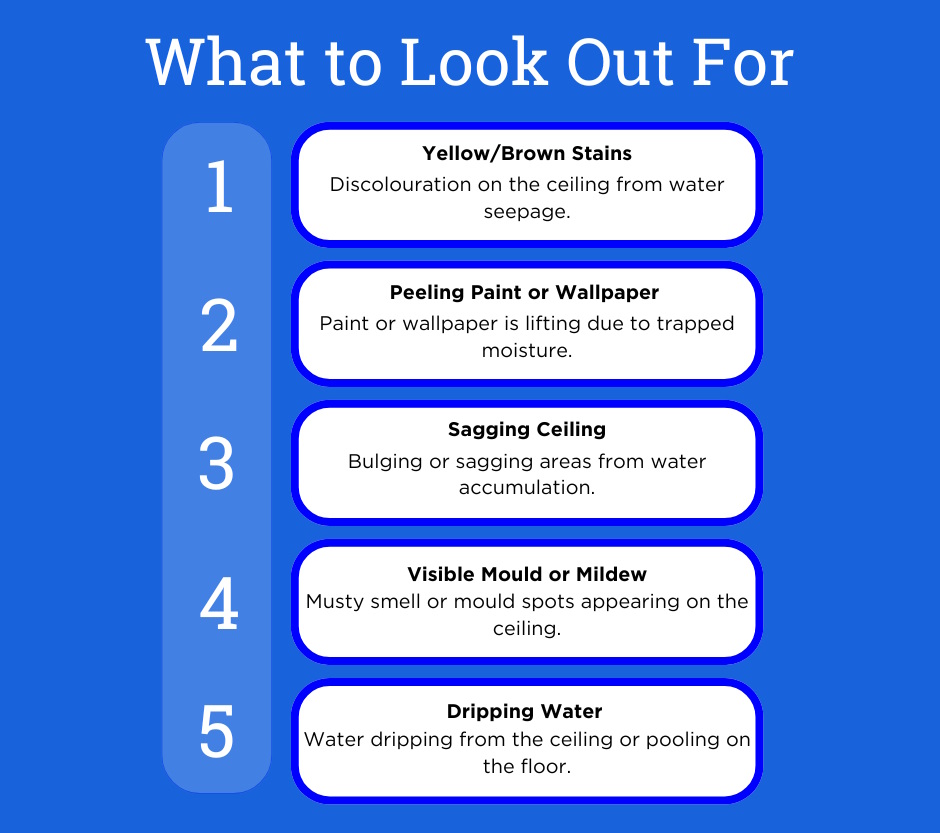
Identifying the early signs of water damage is crucial to preventing further issues. Some of the most common early warning signs include:
- Discolouration and Staining: Yellow or brown stains on your ceiling indicate that water has penetrated the surface. These stains typically appear as the water makes its way through the layers of the ceiling, and they can spread quickly if left untreated.
- Peeling Paint or Wallpaper: If you notice your ceiling paint or wallpaper starting to peel away, it could be a sign of trapped moisture underneath. This often happens when water enters the ceiling and causes the paint to lose its adhesive properties.
- Sagging Ceilings: A sagging ceiling is a clear indication that water has been accumulating, weakening the ceiling structure. This is a serious issue that requires immediate attention, as it can eventually lead to a collapse.
- Visible Mould or Mildew: Mould thrives in damp conditions. If you see any sign of mould or mildew, particularly in areas where water has accumulated, it’s important to take action quickly to avoid health risks.
Ignoring these early symptoms can lead to more severe damage, including structural instability and health hazards like mould growth.
The Risks of Ignoring Water Damage
Water damage to ceilings isn’t just an aesthetic issue - it can cause long-term harm to your home. Prolonged exposure to water can weaken the structural integrity of your ceiling, walls, and even the foundation of your property. Wooden beams and other structural components can rot, while metal supports may rust, making the entire ceiling vulnerable to collapse.
Mould and mildew are other significant risks associated with water-damaged ceilings. Once mould sets in, it can spread quickly and cause damage to furniture, walls, and other surfaces. Mould also poses serious health risks, particularly to those with respiratory conditions or weakened immune systems.
Additionally, water damage can lead to electrical hazards. If water comes into contact with wiring, it can cause short circuits or even fires, particularly if the water has reached electrical fixtures in the ceiling.
Filing a Water Damage Claim: The Insurance Process
When you experience water damage to your ceiling, the next step is to file a water damage claim with your insurer. Understanding the claims process and knowing what to expect can make this step much less stressful.
- Initial Damage Assessment:
After notifying your insurer, a surveyor will visit your property to assess the extent of the damage. They’ll take measurements, photos, and notes on the damage to create an accurate report for your insurer. This is an important stage, as it forms the basis for your claim.
- Policy Review:
Your insurer will review your home insurance policy to determine what is covered. Roof leak and water ingress claims are typically covered under standard home insurance policies, but it’s important to know the specifics of your coverage.
- Claim Approval:
Once the assessment is complete and the insurer has reviewed the claim, they will approve or deny it based on the policy terms. In some cases, insurers may request further documentation or a follow-up inspection.
- Repairs and Restoration:
After approval, the next step is to begin repairs. At All Property Claims, we assist you throughout this process, coordinating with contractors and managing the restoration of your ceiling and any other affected areas. We ensure that all necessary work is completed to restore your home to its original condition.
- Final Settlement:
Once repairs are finished, your insurer will settle the claim. You will only need to pay your policy excess, and we’ll handle all the paperwork and liaise with your insurer to ensure a smooth settlement.
Common Mistakes Homeowners Make in the Claims Process
While filing a water damage claim might seem straightforward, there are several mistakes that homeowners often make, which can delay the process or reduce the settlement amount. Here are some common pitfalls to avoid:
- Not Documenting Damage Properly: A lack of clear documentation can cause delays or complications in the claims process. Take clear photographs of the damage, noting the affected areas and the severity of the issue. If possible, keep a record of any repairs or mitigation efforts you’ve made.
- Delaying the Claim: Time is of the essence when it comes to water damage claims. The longer you wait to file a claim, the more complicated it can become. Water damage often worsens over time, so it’s important to report the issue to your insurer as soon as you notice it.
- Not Working with Experts: Many homeowners try to handle the claims process on their own, which can lead to mistakes. At All Property Claims, we offer expert guidance and support throughout the entire process. From documentation to negotiations with your insurer, we ensure that your claim is handled professionally and efficiently.
How All Property Claims Can Help London Homeowners
At All Property Claims, we specialise in helping homeowners in London navigate the water damage claims process. Whether you’re dealing with a leaking roof, burst pipes, or storm damage, our team of experts is here to support you every step of the way.
We work with trusted contractors to ensure that all repairs are carried out to the highest standard, and we handle all negotiations with your insurer, making sure you receive the full compensation you’re entitled to. Our services are designed to take the stress out of the claims process and get your home back to normal as quickly as possible.
Contact Us
If you’ve experienced water damage to your ceiling, contact All Property Claims today. Our team is available 24/7 to help you with your water damage claim and ensure a smooth restoration process.